What a year! The words of 2025

Let’s start with Spain, since I used to live there. The word of the year for 2025 is arancel (tariff), according to Fundéu, which advises on questions about Spanish language use for news reporting. Due to US policy changes, issues of tariffs for imports and exports have been in the news a lot in Spain.

The runners-up give a peek into other issues in Spanish news: apagón (power outage), macroincendio (massive wildfire), preparacionista (prepper), boicot (boycott), dron (drone), generación Z (Generation Z), macrorredada (massive roundup, specifically ICE arrests in the US) rearme (rearm, as with weapons), papa (pope), tierras raras (rare earths), and trumpismo (Trumpism).

The Economist magazine, Australia’s Macquarie Dictionary, and Merriam-Webster Dictionary all chose slop. “Slop merchants clog up the internet with drivel,” the Economist opines. Merriam-Webster defines slop as “digital content of low quality that is produced usually in quantity by means of artificial intelligence.” The Macquarie definition specifies “low-quality content created by generative AI, often containing errors, and not requested by the user.” All three sites have long lists of runner-up words.

For Oxford University Press, the word is rage bait, “online content deliberately designed to elicit anger or outrage by being frustrating, provocative, or offensive, typically posted in order to increase traffic to or engagement with a particular web page or social media account.” Oxford adds, “The Oxford Word of the Year can be a singular word or expression, which our lexicographers think of as a single unit of meaning.” The runners-up are aura farming and biohack. (Robert Reich points out that rage bait is profitable.)

Dictionary.com chose 67for 2025. “Most other two-digit numbers had no meaningful trend over that period, implying that there is something special about 67,” the site informs us, adding that “we’re all still trying to figure out exactly what it means.” Dictionary.com’s runners-up include an emoji. Both CNN and AP agree 67 can be annoying. The comic xkcd has additional information about funny numbers.

Canada’s Queens University picked maplewash, “the deceptive practice of making things appear more Canadian than they actually are.” That is, maplewashing encourages buying Canadian-made products rather than US imports. The word edged out elbows up. Both words speak to our times, and as an American, I apologize to our nice neighbors to the north.

Cambridge chose parasocial: “involving or relating to a connection that someone feels between themselves and a famous person they do not know, a character in a book, film, TV series, etc., or an artificial intelligence.” It adds, ominously, “The emergence of parasocial relationships with AI bots saw people treat ChatGPT as a confidant, friend or even romantic partner. These led to emotionally meaningful – and in some cases troubling – connections for users, and concerns about the consequences.” Sloppy consequences.

Collins Dictionary picked vibe coding, which “refers to the use of artificial intelligence prompted by natural language to write computer code.” (See also: slop.) Collins, too, has a runner-up list, and some of those terms will sound familiar.

Global Times reports that the Trilateral Cooperation Secretariat has chosen future as the China-Japan-South Korea Spirit Word of the Year. The secretary-general of TCS said future reflects the optimism and determination of the people of China, Japan, and South Korea to build closer ties in the future.

Time chose “the architects of AI” as Person of the Year 2025. (See also: slop.)

Pantone chose its color of the year, Cloud Dancer, “a lofty white that serves as a symbol of calming influence in a society rediscovering the value of quiet reflection. A billowy white imbued with serenity, PANTONE 11-4201 Cloud Dancer encourages true relaxation and focus, allowing the mind to wander and creativity to breathe, making room for innovation.”

As reported by NPR and Today, not everyone is impressed by the color, although Homes and Gardens points out that “white is timeless.” I should mention that my home office is painted white. In my case, it’s because I was too lazy to think harder.
Your father’s first Christmas

I wrote this piece as a Christmas present for my nephew in 2004.

This is your first Christmas, Sean, and since you’re only eight months old, I know this story might not impress you much, but it seems like the right time to tell it.

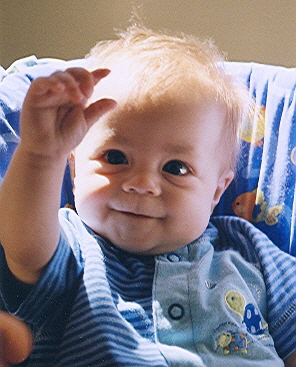
Your father was not quite three months old on his first Christmas, and I was ten years old. I knew enough about babies to know they don’t really do much at first, but eventually they grow into real people. That was the exciting puzzle. What was this new baby brother going to be like? We didn’t have many clues, but we watched for them all the time. Who was Louis Peter Burke?

Your Grandmother Burke died well before you were born, so you don’t know much about her. Here is her Christmas tree decorating theory: More is better. In architectural terms, it was rococo baroque.

During Christmas Eve day, we decorated the tree. First the lights went on — big lights, small lights, steady lights, twinkle lights, colored lights, white lights, all the lights we had, and there were plenty. Second, we hung every single ornament we had on the tree, and, again, there were plenty. If one was ugly or beat up, it went way in the inside where it could add color or sparkle without really being visible. The only rule was smaller stuff on top, bigger stuff on the bottom. Finally, we added tinsel and garlands of various types and colors to be sure there was maximum sparkle.

Then we waited for nightfall, since only a darkened house could do justice to the masterpiece we had created.

Meanwhile, we dressed your father in a red-and-white-striped elf-costume pajama set that an aunt had given him, complete with a pointy cap. He didn’t care for the cap but we made him wear it anyway, at least long enough for a photo, which may still be around somewhere. He looked more silly than elfish. He certainly had no idea about what was going on. He was too little to understand much of anything.

The moment to light the tree arrived. We turned out all the lamps and closed the front curtains to block the streetlight. With a flip of a switch, the tree flashed on, providing enough sparkling light to read by.

Your father’s eyes got big and he couldn’t take them off the tree. He liked it! He liked it a lot! Even when we turned the room lights back on, he continued to stare at the tree, fascinated.

It was a clue, the first clue I remember, about your father’s personality. He liked colorful, beautiful things — at least, we thought the tree was beautiful, and in a rococo way, it certainly was. We lit the tree for him throughout the holidays for the sheer fun of watching him enjoy it.

I don’t remember much else about that Christmas, like what I got as presents, what anyone else got, whether there was snow, or what we had for Christmas dinner. All I remember is the intense look of surprise and delight on your father’s little face, and how merry a Christmas he made it for all of us because we could make him happy, and because we had learned a little bit about him.

Finding out who someone is takes a long time. I’m still learning things about my brother Louis. Fatherhood, for example, has revealed new aspects of his personality and interests. In the same delighted way that I first saw so many years ago, he could not be more curious and excited to learn about you. Who is Sean Patrick Burke?

This is your father’s first Christmas with you. I hope it is merry.

Copyright © 2004 by Sue Burke, all rights assigned to Sean Patrick Burke.

Don’t just say no

Rejections and fun don’t mix – except this one time.

I wrote a horror story about vampires and started sending it out. The story made the second cut in an anthology but not the final one. Oh, well. I sent it out again right away and got a response of “close, very close” from the editor. Not bad!

Then … the very next magazine rejected it with a note saying that it was “cruel and evil.” Evil? A vampire horror story? Isn’t that the point? I laughed about it with my writer friends, and for a while I was known as “the evil Sue Burke.”

The next magazine rejected it with (this was by snailmail) a preprinted note saying: “We celebrate your achievement!” Although the editors couldn’t take the story, the note said, they wanted me to know how proud they were of me for having written it and taken part in the furtherance of literature. Or something like that. I think they meant it because they dropped a sprinkle of confetti into the envelope — really cool confetti. I used it to decorate my desk lamp.

I kept sending the story out, got rejections both bland and encouraging, and on the 21st try, I found a magazine that loved it and took it. A few years later the story was even reprinted in an anthology. All’s well that ends well.

I learned four things from this adventure:

1. Confetti should accompany all rejections. Or, now that we send most things out via internet, a picture of a cute kitten. How hard would that be?

2. Rejections are about the story, not about the writer, which is too bad because I’d really like to be evil.

3. As we all know, rejections are a necessary step toward publication. We can even make a game out of them. I wish I could remember who I learned this from so I could give her credit: Try to see if you can achieve a certain number of rejections in a single day. She suggested five, so I made that my goal. The most I’ve ever gotten is three.

4. I need more rejections if I’m ever going to win the rejection game, which means I have to get more submissions out there. So, if you’ll excuse me, I’m going to go write something, and as a parting gift, here’s a picture of a cute kitten. Celebrate your next rejection with it. We all deserve a little fun.

Go Ahead — Write This Story: Beginnings

Here are some writing prompts. If any of these prompt a story or idea for you, go for it! Ideas a free, and you can use these prompts freely any way you want.

“An angry man — there is my story: the bitter rancor of Achilles…” Thus Homer begins The Iliad. When does a story begin? To answer that question, you should understand your story thoroughly. Author John Kessel says a story begins when a situation loses balance. Homer begins his story when Agamemnon insults Achilles at the siege of Troy, they fight, and as a result, soon the souls of champions glut Hell while dogs and ravens feast on their corpses. Star Wars begins when Princess Leia sends a desperate plea for help that falls into the hands of her long-lost brother (spoiler, sorry) who, eventually, tries to destroy the evil Empire.

Here are some possible story beginnings:

• This made-for-TV movie begins when a wildlife biology crew comes to a ghost town on Mars to study the creatures who have made homes in the empty buildings.

• This cyberpunk story begins as artificially reformed convicts try to make their way in a society that doubts their transformations — transformations they themselves doubt.

• This story begins with Rio, the first baby born after the human population exceeds the supply of souls available for reincarnation.